Understanding and Addressing a Common HVAC Problem in Florida
Refrigerant is the lifeblood of your air conditioning system. It circulates through your system, absorbing heat from your home and releasing it outside. When your refrigerant level drops due to a leak, your AC can’t cool your home effectively. Understanding the causes of refrigerant leaks, recognizing the signs, and knowing when to call a professional can help you address this problem quickly and avoid more serious damage.
What Is Refrigerant?
Refrigerant is a chemical compound that circulates through your air conditioning system in a closed loop. It changes between liquid and gas states as it moves through different parts of your system, absorbing and releasing heat in the process. Common types of refrigerant include R-22 (Freon) and R-410A (Puron).
It’s important to note that refrigerant is not consumed by your system—it should remain at the same level indefinitely. If your refrigerant level drops, it indicates a leak.
Causes of Refrigerant Leaks
Pinhole Leaks in Coils
Over time, the copper coils in your evaporator and condenser units can develop tiny pinhole leaks. This is especially common in Florida, where the salt air and humidity can corrode copper components.
Loose or Damaged Connections
The refrigerant lines that connect your indoor and outdoor units can loosen or become damaged, allowing refrigerant to escape.
Vibration and Wear
Constant vibration from your compressor can cause connections to loosen over time.
Manufacturing Defects
In rare cases, a manufacturing defect can cause a refrigerant leak.
Corrosion
In coastal areas like Royal Palm Beach, salt air can corrode refrigerant lines and connections, leading to leaks.
Signs of a Refrigerant Leak
If you notice any of the following signs, your system may have a refrigerant leak:
1. Warm Air from Your Vents
If your AC is running but blowing warm or lukewarm air, low refrigerant is a likely culprit. Your system can’t absorb enough heat from your home without adequate refrigerant.
2. Hissing Sounds
A hissing sound coming from your indoor or outdoor unit often indicates a refrigerant leak. The sound is caused by refrigerant escaping from a small hole.
3. Bubbling Sounds
A bubbling sound from your indoor unit can indicate low refrigerant, which causes the refrigerant to boil inside the evaporator coil.
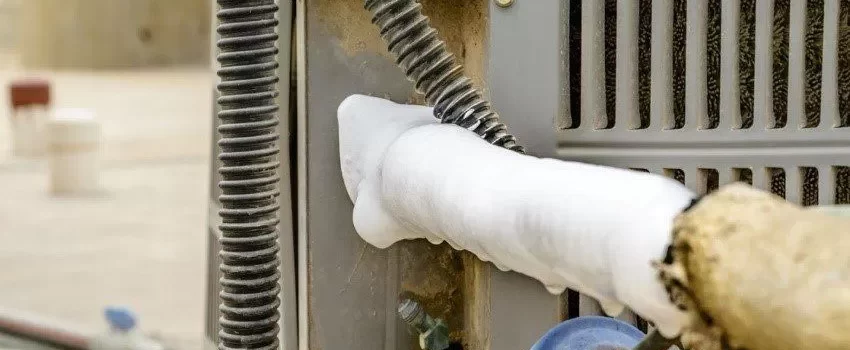
4. Ice Buildup on Refrigerant Lines
If you see ice or frost on the refrigerant lines running between your indoor and outdoor units, this can indicate low refrigerant. The low pressure caused by low refrigerant can cause the lines to get too cold.
5. Higher Energy Bills
A system with low refrigerant has to work harder to cool your home, resulting in higher energy consumption and higher electricity bills.
6. Visible Oily Residue
Refrigerant is often mixed with oil to lubricate the compressor. If you see an oily residue around your outdoor unit or on refrigerant lines, this indicates a leak.
What to Do If You Suspect a Refrigerant Leak
Don’t Attempt to Fix It Yourself
Refrigerant handling is regulated by the EPA and requires special training and equipment. Attempting to handle refrigerant yourself is illegal and dangerous. Never try to add refrigerant to your system yourself.
Contact a Licensed HVAC Technician
If you suspect a refrigerant leak, contact a licensed HVAC technician like Pro-Tech Air immediately. Our technicians can:
Locate the Leak: Using specialized equipment, we can locate the source of the leak.
Repair the Leak: We’ll repair the leak by tightening connections, replacing damaged lines, or replacing coils if necessary.
Recharge Your System: Once the leak is repaired, we’ll recharge your system with the correct amount of refrigerant.
Test Your System: We’ll test your system to ensure it’s operating properly.
Prevention of Refrigerant Leaks
While you can’t prevent all refrigerant leaks, regular maintenance can help catch leaks early and prevent some types of leaks:
Schedule Regular Maintenance: A twice-yearly professional tune-up can help identify potential leaks before they become serious.
Keep Your Outdoor Unit Clean: Remove debris and keep vegetation trimmed back to prevent damage to your outdoor unit.
Address Corrosion: In coastal areas, regular cleaning and maintenance can help prevent corrosion-related leaks.
Ensure Proper Installation: A properly installed system is less likely to develop leaks due to loose connections.
The Cost of Refrigerant Leak Repair
The cost of repairing a refrigerant leak varies depending on the location and severity of the leak:
Simple Connection Tightening: $100-$300
Refrigerant Line Replacement: $300-$800
Coil Replacement: $1,000-$2,500+
While these costs may seem high, addressing a refrigerant leak promptly is important. A system with low refrigerant will eventually fail completely, and continued operation can damage your compressor, which is the most expensive component to replace.
Your Trusted HVAC Partner in Royal Palm Beach
At Pro-Tech Air, we have the expertise and equipment to diagnose and repair refrigerant leaks quickly and efficiently. Our NATE-certified technicians are trained in proper refrigerant handling and can get your system back in working order.
If you suspect a refrigerant leak, contact Pro-Tech Air today. We offer free estimates and are committed to providing honest, reliable service.